logo
Home News

company news about Water Softener vs. Water Descaler: Which One Should You Choose for Hard Water?

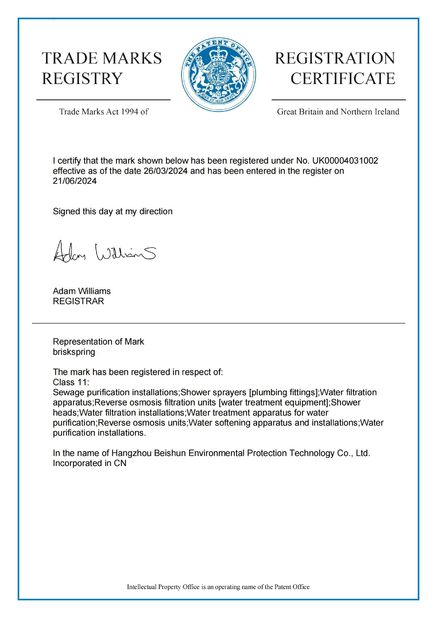
Certification
china HANGZHOU BEISHUN BRISKSPRING ENVIRONMENTAL TECHNOLOGY CO., LTD. certification
Customer Reviews
Limescale descaler is good, from the very beginning everyone at hose felt the difference in the water.

—— Pedro Aguiar

The customer service is top-notch, making the entire process seamless. If on the fence, go for it. We tried this firstly for a commercial place, a shop that do much work with the water, which is relatively hard. Now we see the result pretty positive, thus, some more shops would get equipped.

—— Oliver

Good quality and design. Very easy for installation and setting. You can feel the effectiveness of the SAAS device immediately after installation

—— Michael Lin

배송: 빠르게 받았습니다。 구매 후 7일 입니다。 서비스: 빠른 배송을 위해 지속적으로 모니터링 해 주었습니다。 품질: 다양한 악세사리를 보내주셔서 어느위치에서도 잘 맞았습니다。 디자인: 약간 아쉬운 점이 있긴 합니다만。。。 기술이 커버 해 주었습니다。 보금더 디자인에 신경 써 주었으면 합니다。 Delivery: I received it quickly, within 7 days after purchase. Service: They continuously monitored to ensure fast delivery. Quality: They included various accessories, so it fit well

—— leedm0617 l

Mẫu mã sản phẩm hoàn thiện tốt còn chất lượng chưa sử dụng chưa có đánh giá được The finished product model is good and the quality has not been used and has not been evaluated

—— Phong Pham

I am very happy with the quality of the product, excellent quality and excellent performance, the price is really very good and the seller is very very kind and always available and cooperative, the shipping was super fast and the quality packaging, I recommend it 100%

—— Ezequiel Pardal Zurchmitten

Good quality, fast delivery. Will continue to buy

—— Minh Phan

fast delivery, very good communication. the product looks like it’s made out of high-quality materials. I haven’t installed yet but looks very good. very happy with the purchase.

—— Pedro Aguiar

I'm Online Chat Now
Company News
Water Softener vs. Water Descaler: Which One Should You Choose for Hard Water?
Latest company news about Water Softener vs. Water Descaler: Which One Should You Choose for Hard Water?

Hard water is one of those “quiet problems” that doesn’t look like an emergency… until you notice:

• White scale on faucets and shower glass

• Kettles and coffee machines building chalky deposits

• Water heaters losing efficiency over time

• Soap that doesn’t lather well and leaves residue

• More cleaning, more scrubbing, more frustration

latest company news about Water Softener vs. Water Descaler: Which One Should You Choose for Hard Water?  0


latest company news about Water Softener vs. Water Descaler: Which One Should You Choose for Hard Water?  1


So you start searching, and you end up stuck between two similar-sounding solutions:

• Water Softener (traditional salt-based softening)

• Water Descaler (salt-free scale reduction / conditioning)

They’re both designed to reduce the effects of hard water, but they work in very different ways, and they don’t deliver the same “feel” or maintenance routine.

This guide breaks it down clearly—so you can choose the right approach for your home without guesswork.

1) First: What “Hard Water” Really Means (in numbers)

Hard water mainly comes from calcium and magnesium dissolved into your water as it moves through rock and soil.

It’s usually not a health risk, but it’s great at creating scale buildup around the home.

A practical hardness scale (in mg/L or ppm as CaCO₃) often used in home water treatment is:

• 0–50 mg/L: Soft

• 51–200 mg/L: Moderately hard

• 201–300 mg/L: Hard

• 301–400 mg/L: Exceptionally High

• >401 mg/L: Very hard

If your report uses gpg (grains per gallon), you can convert like this:

• gpg = (mg/L or ppm) ÷ 17.1

Quick reality check:

If your hardness is still “high” after installing a descaler, that can be normal—because many descalers don’t remove minerals (more on that next).

latest company news about Water Softener vs. Water Descaler: Which One Should You Choose for Hard Water?  2

2) Water Softeners: What They Do (and why they feel different)

A traditional water softener uses ion exchange to remove hardness minerals (calcium and magnesium) and replace them with sodium or potassium ions.

What that typically means for you at home:

Benefits people notice

• Less scale in plumbing and on heating surfaces (because the minerals were removed)

• Less soap scum, and soap/detergent can lather more easily

• Many people report softer-feeling skin and more manageable hair

latest company news about Water Softener vs. Water Descaler: Which One Should You Choose for Hard Water?  3

Trade-offs you should be aware of

• Softeners typically require salt refills and periodic system regeneration with brine

• Brine discharge can become an environmental concern in some areas; the Water Quality Association notes that chloride can’t be removed using standard wastewater treatment technology, so it can pass through treatment plants into natural waters.

• Some regions have even restricted certain automatic water softeners; for example, Los Angeles County Sanitation District information describes the Santa Clarita Valley ordinance requiring removal of residential automatic water softeners (historically to reduce chloride in discharged water).

Bottom line:

If you want true softened water (minerals removed) and that classic “soft water feel,” a softener is the most direct method.

latest company news about Water Softener vs. Water Descaler: Which One Should You Choose for Hard Water?  4

3) Water Descalers: What They Do (and what they don’t)

A water descaler (often called a water conditioner or salt-free softener in marketing) generally takes a different approach:

• It does not remove calcium and magnesium from the water.

• Instead, it aims to reduce scale buildup by changing how minerals behave so they’re less likely to stick to surfaces.

latest company news about Water Softener vs. Water Descaler: Which One Should You Choose for Hard Water?  5

This is why many descalers are marketed as:

• Salt-free

• Low-maintenance

• Eco-friendlier (no brine discharge)

What you can realistically expect

• Less stubborn scale buildup on fixtures and heating surfaces

• Easier cleaning in many households

• Minimal maintenance compared with salt-based softeners

What you should NOT expect

• Your hardness test reading to drop to “soft” levels (because minerals remain in the water)

• Soap scum to disappear the same way it often does with a true softener

Bottom line:

A descaler is often best for people who want scale reduction without salt, and who prefer a simpler, low-maintenance system.

latest company news about Water Softener vs. Water Descaler: Which One Should You Choose for Hard Water?  6

4) Side-by-side comparison (quick decision helper)

Question Choose a Water Softener Choose a Water Descaler

Do you need minerals removed (true soft water)? ✅ Yes ❌ No (minerals stay)

Want less scale buildup? ✅ Yes ✅ Yes

Want less soap scum / better lather? ✅ Yes Often limited

Prefer low maintenance? Salt refills needed Minimal maintenance

Concerned about brine discharge? Might be a concern in some areas No brine discharge

latest company news about Water Softener vs. Water Descaler: Which One Should You Choose for Hard Water?  7

5) Can you use both together?


Yes—especially in very hard water areas. One source explicitly notes that combining both can “provide the best of both worlds”: the softener removes minerals, while the descaler further conditions water to reduce scale risk in certain areas.

Introducing BriskSpring: Physical-Chip Water Descaler for Scale Reduction

At BriskSpring, our solution focuses on what most homeowners actually want day-to-day:

Less scale. Less cleaning. Less “hard water damage.” Without the routine of buying and refilling salt.

latest company news about Water Softener vs. Water Descaler: Which One Should You Choose for Hard Water?  8

What makes BriskSpring different?

BriskSpring is a water descaler using a pure physical-chip descaling approach (no salt-based ion exchange).

That means:

• We’re not trying to “remove” calcium/magnesium like a softener does (so hardness readings may not drop to zero).

• We’re focused on reducing scale buildup—the stuff that clogs, coats, and sticks.

If you’re the kind of homeowner who values simplicity and low maintenance, descaling is often the most practical first step—especially for moderate hardness water.

latest company news about Water Softener vs. Water Descaler: Which One Should You Choose for Hard Water?  7

6) Flow rate matters: BriskSpring is built for real household demand

Our core models are designed for a high-flow household range:

• 4,000–6,000 liters/hour

• That equals 66.7–100 L/min

• Roughly 17.6–26.4 US GPM (gallons per minute)

latest company news about Water Softener vs. Water Descaler: Which One Should You Choose for Hard Water?  10

What does that mean in daily life?

• A “standard” showerhead in the U.S. is often referenced around 2.5 gpm, while WaterSense-labeled showerheads are ≤2.0 gpm (7.6 L/min).

• So BriskSpring’s flow range is designed to keep up with peak household usage where multiple water points may run close together (showers, faucets, appliances).

Practical note: Your real peak flow depends on plumbing layout, pressure, and how many fixtures run simultaneously—but choosing a system that won’t bottleneck your flow is a big deal for comfort.


7) Who BriskSpring is best for (honest fit)

BriskSpring is a great match if:

• You want scale reduction more than the “soft water feel”

• You prefer a salt-free, low-maintenance approach

• You don’t want to deal with salt storage/refills and regeneration routines

• You want a solution that’s easier to live with day-to-day

• Your hardness is mild to moderate, or you mainly want protection against scale buildup

latest company news about Water Softener vs. Water Descaler: Which One Should You Choose for Hard Water?  11

You may want a traditional softener instead if:

• You need hardness minerals removed (true soft water)

• Your main goal is eliminating soap scum and getting maximum lather improvement

• Your water is very hard and you want the most aggressive, proven removal method

latest company news about Water Softener vs. Water Descaler: Which One Should You Choose for Hard Water?  12

FAQ: The questions people ask before buying

“Will BriskSpring reduce my hardness number on a test strip?”

Not necessarily. Many descalers don’t remove calcium and magnesium, so hardness tests can still read hard. Descalers are about reducing scale buildup, not creating “true soft water.”


“Does a descaler eliminate soap scum like a softener?”

Usually not to the same degree. One comparison explicitly notes softeners eliminate soap scum while descalers typically do not.


“Why do some people prefer descalers then?”

Because they are generally easier to install and maintain, and they don’t require salt or chemicals—making them a low-maintenance alternative for many households.


“What about the environmental side?”

Salt-based softeners can contribute chloride to wastewater; chloride is difficult to remove with standard wastewater treatment and can pass through into natural waters.

That’s one reason some homeowners prefer salt-free options.


A simple 60-second choosing checklist

If you answer “YES” to most of these, you’re probably a BriskSpring household:

• I mainly want less scale buildup and easier cleaning.

• I don’t want to keep buying, carrying, and refilling salt.

• I want a low-maintenance approach.

• My home needs a system that can handle high flow (4,000–6,000 L/h range).

• I’m okay with the fact that minerals may still be present (hardness test may not change).

Closing: The “right” choice is the one you’ll actually keep using


Here’s the truth:

Some homes need the full mineral-removal approach of a softener. Others mainly need a practical way to stop scale from taking over the bathroom, kitchen, and hot water system.

BriskSpring exists for the second group.

If you want a salt-free, physical-chip water descaler designed around real household flow (4,000–6,000 L/h), we’d love to help you size it correctly.

latest company news about Water Softener vs. Water Descaler: Which One Should You Choose for Hard Water?  13

Call to action (copy/paste-ready)

Want a fast recommendation?

Send us:

1. your city/country,

2. water source (city or well),

3. hardness reading (mg/L, ppm, or gpg),

4. number of bathrooms / peak simultaneous usage.

We’ll recommend the best BriskSpring configuration for your home.

Conclusion: Toward a Smarter Way to Protect Water Systems+

BriskSpring isn’t just selling products—we’re redefining how water is treated.

Through proven physical water descaling technology, our water descalers reduce scale formation, protect pipes and appliances, and help maintain stable water performance—without chemicals, salt, or added maintenance.

From extending the service life of household systems to improving water efficiency in daily use, every installation delivers long-term value. Less scale, lower energy loss, fewer replacements—real results you can measure over time.

Choose BriskSpring water descalers and move toward a cleaner, more sustainable way to manage water.

Explore our solutions today and experience smarter water protection.

Joe Zhou

WhatsApp: +86 132 7500 1614

Email: joe@briskspring.com

#Water Descaler

#Water Softener vs Water Descaler

#Hard Water Solutions

#Salt-Free Water Descaler

#Physical Water Descaler

#Scale Reduction System

#Hard Water Scale Prevention


Pub Time : 2025-12-20 11:05:15 >> News list
Contact Details
HANGZHOU BEISHUN BRISKSPRING ENVIRONMENTAL TECHNOLOGY CO., LTD.

Contact Person: Ms. Amanda BS

Tel: +86 137 5812 5058

Fax: 86-571-81023093

Send your inquiry directly to us (0 / 3000)